The French Bob: How to Wear the Timeless Parisian Haircut
Few haircuts carry as much instant character as the French bob. Unlike a precision Anglo-American blunt bob that demands razor-sharp straightness, the French bob is built on subtle texture, natural movement, and an easy, lived-in feel.
Cut right along the cheekbone or jawline and paired with soft, wispy bangs that graze the eyebrows, this style frames your bone structure like nothing else.
Anatomy of the Perfect French Bob
To ensure you leave the salon with the exact look you envision, keep these essential elements in mind:
- The Length: Traditionally hits between the bottom of the earlobe and the corner of the jawline. Grazing the mouth line creates maximum vintage charm.
- The Fringe: A light, brow-skimming or micro-fringe with soft, shattered ends rather than a heavy, solid block.
- Internal Layers: Subtle, invisible graduation underneath prevents the cut from taking on a triangular “pyramid” shape on thicker hair textures.
What to Ask Your Stylist
When you sit in the chair:
- Ask for razor cutting or point cutting: This gives the perimeter that signature soft, flicked-out edge rather than a sterile blunt line.
- Clarify your natural texture: If you have natural waves or curls, ask for the cut to be shaped while dry so shrinkage doesn’t take the length shorter than intended.
- Weight reduction at the perimeter: Request internal debulking around the nape so the hair sits close to the neck.
3 Low-Effort Ways to Style It
1. The Air-Dried Parisian Texture (Zero Hot Tools)
The ultimate everyday routine for the French bob requires almost no heat.
- Towel-dry hair thoroughly using a microfiber towel or cotton t-shirt.
- Rake a dime-sized amount of air-dry styling balm or sea-salt cream from mid-lengths to ends.
- Tuck both sides behind your ears while damp—this trains the front pieces into a gentle S-curve as they dry.
- Once 100% dry, untuck behind your ears, flip your head upside down, and massage your roots.
2. The Soft Polished Wave
For evening events or professional settings where you want defined movement:
- Take a 1-inch flat iron and clamp 2-inch vertical sections.
- Alternate between twisting your wrist forward and backward in a gentle “wave” pattern down each strand.
- Leave the bottom half-inch of your ends straight for a modern edge.
- Finish with a drop of lightweight dry hair oil rubbed across your palms and lightly skimmed over surface flyaways.
3. The 60s Tuck
For retro French girl energy:
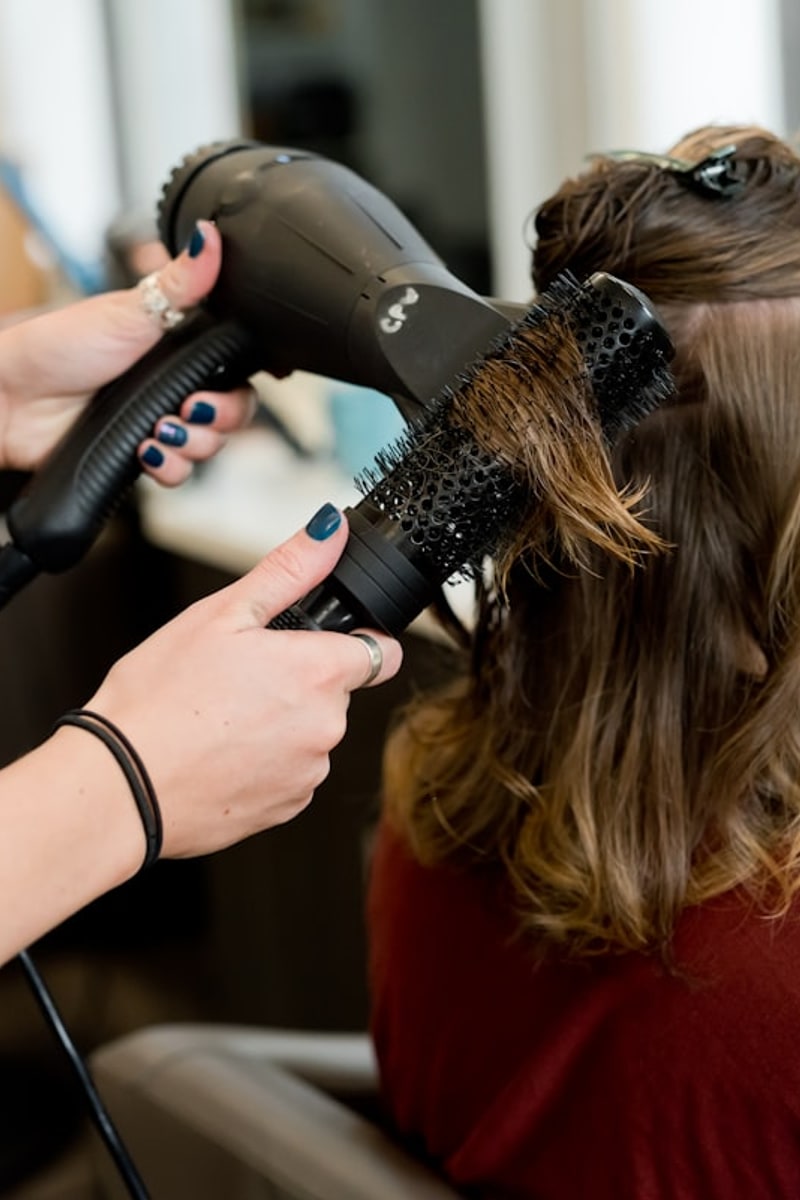
- Blow-dry with a medium paddle brush, gently beveling the ends inward toward your jawline.
- Keep the bangs straight and wispy.
- Tuck one side behind one ear to show off statement earrings or a crisp collared shirt.
Is a French Bob Right for Your Hair Type?
- Fine, Straight Hair: Gains immediate apparent density and volume because the shorter length eliminates heavy dragging weight.
- Naturally Wavy Hair: The holy grail combination—waves nest into the cut with zero styling required.
- Thick / Coarse Hair: Needs skilled internal texture carving from your stylist to prevent bottom-heavy puffiness.
- Curly Hair: Creates a stunning halo shape that highlights eye color and cheekbones.
Keep scrolling
All posts